
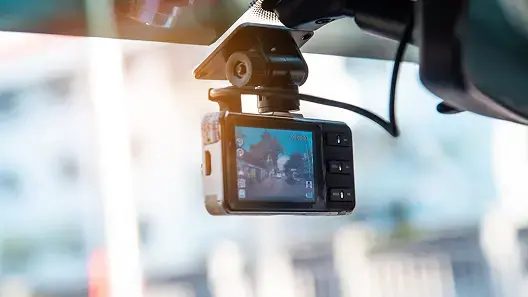
A dash cam might seem like your best ally on the road: a device that quietly records everything in case something goes wrong. You expect that if another driver hits you, the footage will show exactly what happened and protect you from blame. But that sense of security only goes so far.
The truth is, a dash cam can absolutely help after a crash, but it can also work against you if you are not careful. Before you start relying on one to tell your side of the story, you need to understand what it actually captures and how that footage holds up when it matters most.
What dash cams actually record
Most dash cams only give a partial view, typically what’s directly in front of you, and sometimes the rear or inside of the car, depending on the setup. That means they miss everything outside the camera’s frame, including side impacts, a pedestrian suddenly stepping off the curb, or another driver’s reckless behavior out of view.
These cameras also can’t capture your thoughts, reactions, or reasons for doing what you did in the moment. So while it might look like you didn’t stop in time, the footage won’t explain that the other driver cut you off or slammed their brakes unexpectedly. What you get is a slice of the scene, not the whole picture.
When dash cam footage helps your case
Your dash cam becomes valuable when it catches clear and time-stamped proof of what went wrong. If the footage shows another car running a red light, drifting into your lane, or rear-ending you at a stop, that can help support your version of events and show you weren’t at fault.
Insurance companies and investigators often rely on that kind of evidence to assess liability quickly. And if the footage is crisp, unedited, and immediately available, it can make your claim easier to prove, especially when the other driver tries to change their story.
When dash cam footage can work against you
Just like it can help you, your dash cam can just as easily hurt you. If the recording shows you speeding, looking at your phone, or reacting too late, you can expect that footage to be used to question your role in the crash. Even if you weren’t entirely at fault, the other side can point to that footage to argue for shared responsibility.
If your own recording contradicts what you said to the police or the insurance adjuster, that’s going to raise questions about your credibility. What you thought would protect you can easily become the strongest argument against you.
How insurance and legal teams actually use dash cam footage
In real-world claims and lawsuits, dash cam footage serves as just one piece of the evidence puzzle. Your insurer or attorney might use it to back up your account, challenge a false accusation, or verify key details like timing, weather, or traffic flow. But no one treats it as the only source of truth. If the video leaves out something important like audio, context, or a second angle, you still need other facts to support your claim. In short, it’s a tool, not a magic fix.
Make your footage count when it matters
If you choose to rely on a dash cam, don’t treat it as a guarantee. Instead, treat it as a starting point. Make sure the camera records clearly, stores footage securely, and keeps a running loop that you can save immediately after a crash. If you do get into an accident, act fast: preserve the footage, document the scene, and talk to someone who can help you figure out how to use that video strategically rather than blindly handing it over.